
Based on geographical locations and thematic context, we have compiled suggested routes for you to plan your own itineraries beyond the guided tours. You can set off at your own pace for your excursion, whether it be a relaxing half-day stroll or a full-day in-depth exploration. Below are the route information and video clips (continuously updated):

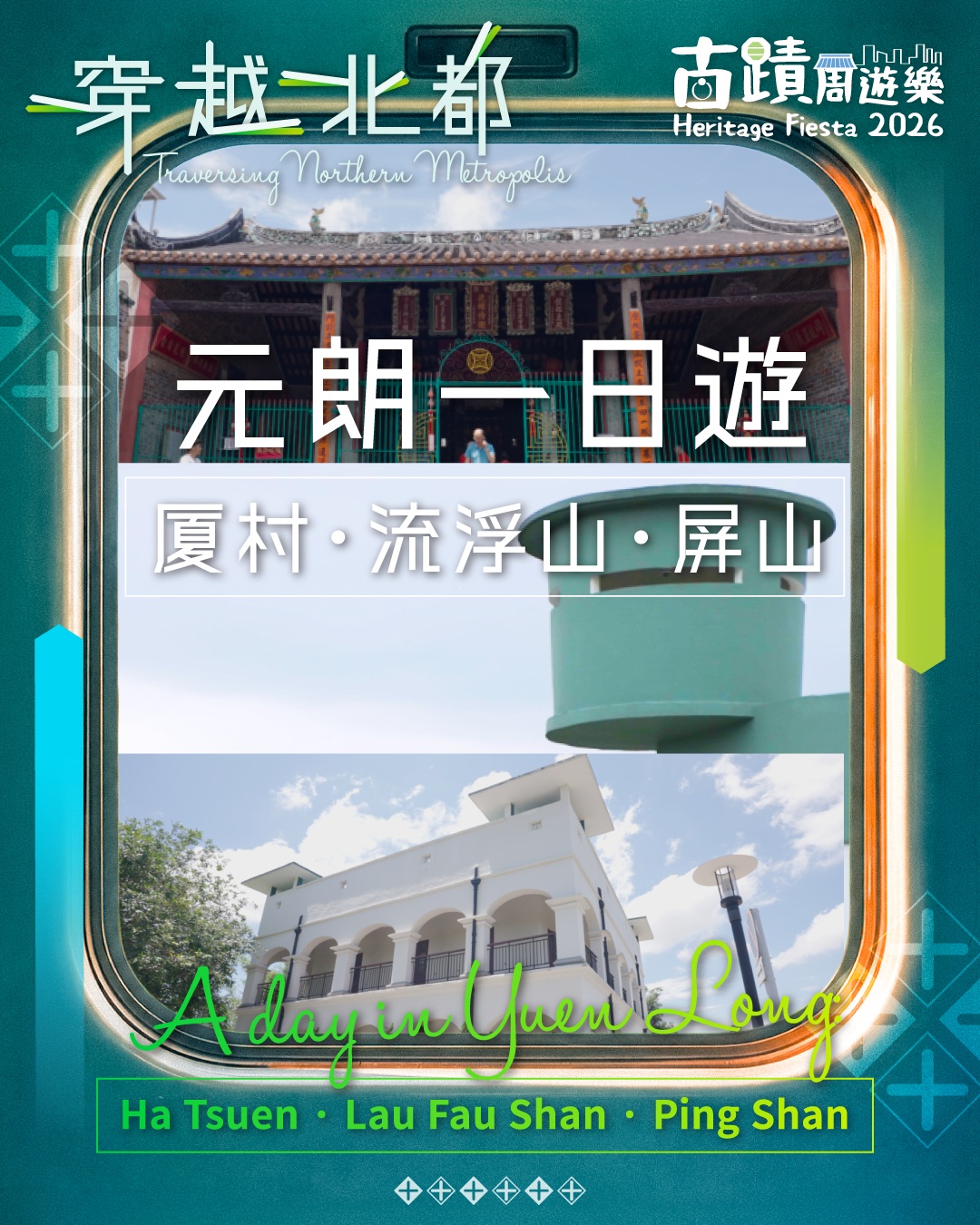
Route 1|Yuen Long Day Trip: Ha Tsuen · Lau Fau Shan · Ping Shan

Route 1|Yuen Long Day Trip: Ha Tsuen · Lau Fau Shan · Ping Shan
Play Video

📍Stop 1: Ha Tsuen Historic Buildings Cluster (Declared Monument)
🚌Transfer to K65 bus at Tin Shui Wai MTR Station and alight at Ha Tsuen bus stop
🏛️Tang Ancestral Hall, Ha Tsuen: A three-hall-three-bay layout with two courtyards built by the Tang clan of Ha Tsuen to commemorate their ancestors
🏛️The Guesthouse: Formerly a place to accommodate staying guests, and once used as classrooms and teachers' dormitories

📍Stop 2: Former Lau Fau Shan Police Station (currently Former Lau Fau Shan Police Station – Hong Kong Guide Dogs Academy) (Grade 3 Historic Building)
🚌 Take K65 bus from Ha Tsuen bus stop to Lau Fau Shan bus terminus
🏛️ Once a police lookout guarding the Deep Bay shoreline, now revitalised with its original character preserved
⚠️ Advance booking required via the Academy's website

📍Stop 3: Old Ping Shan Police Station (currently Ping Shan Tang Clan Gallery cum Heritage Trail Visitors Centre) (Grade 2 Historic Building)
🚌 Take K65 bus from Lau Fau Shan bus terminus to Hang Mei Tsuen bus stop
🏛️One of the oldest surviving police stations in the New Territories. The arched verandah of the main building is a must-shoot
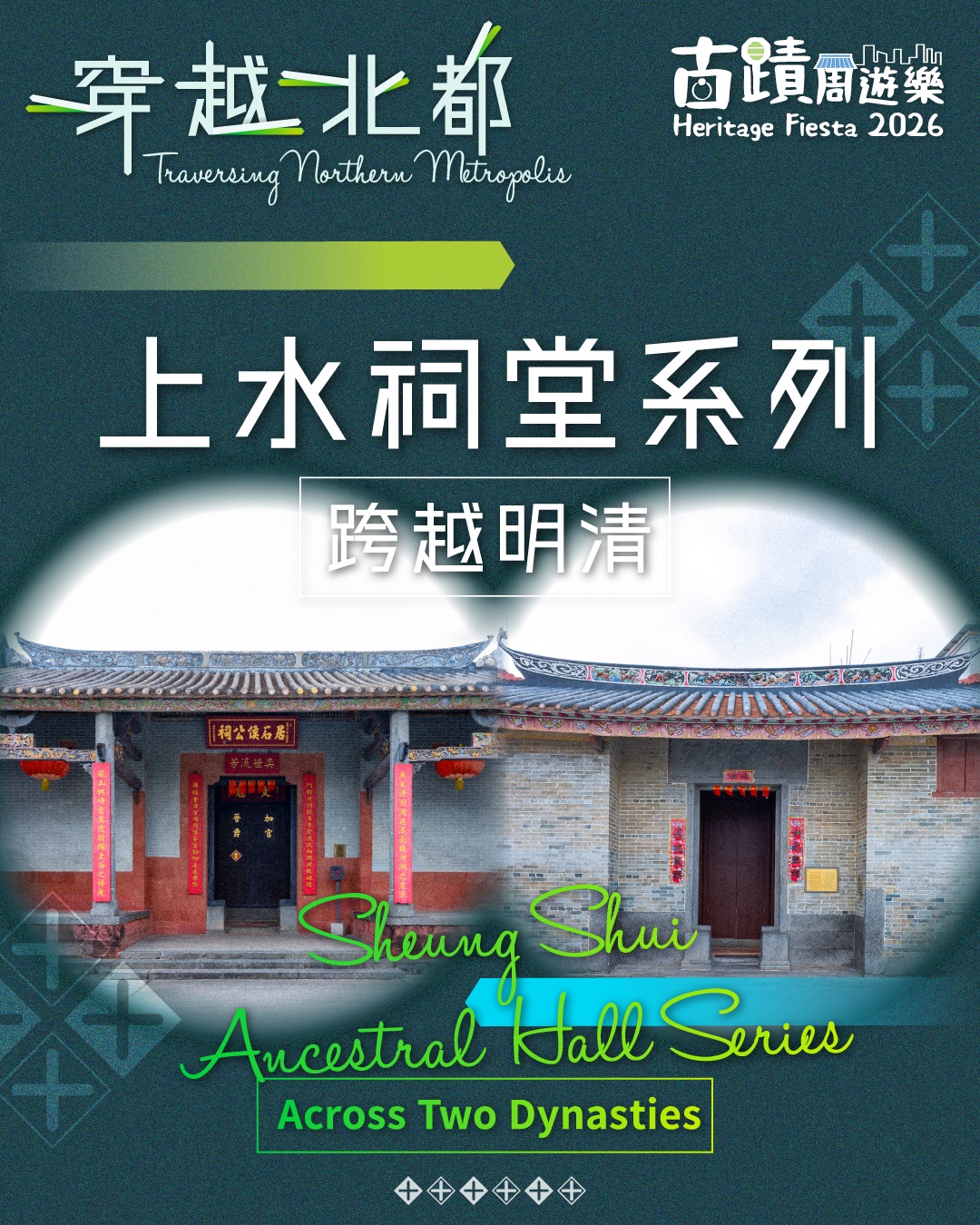
Route 2|Sheung Shui Ancestral Halls: Across Two Dynasties 📜

Route 2|Sheung Shui Ancestral Halls: Across Two Dynasties 📜
Play Video

📍 Stop 1: Hau Ku Shek Ancestral Hall (Declared Monument)
🚌Take minibus 51K at MTR Sheung Shui Station to Ho Sheung Heung Terminus
🏛️Built in the Ming dynasty to commemorate Hau Ku-shek, the 17th generation ancestor of the Hau clan, it adopts a traditional three-hall- two courtyard layout, with a side chamber on each side of the front courtyard, an altar in the middle hall housing ancestral tablets, and a two-storey rear hall that was once used as a village school. Today, villagers still hold meetings and daily gatherings, and gather for ancestral worship and traditional ceremonies there.

📍 Stop 2: Hau Mei Fung Ancestral Hall (Declared Monument)
🚌Walk for about 35 minutes along Ho Sheung Heung Road and Kam Tsin Road, or take  minibus 51K to Kam Tsin Village
🏛️Built around the late 18th century by juren scholar Hau Cheuk-wan to commemorate his great-grandfather, Hau Jui-fei (alias Hau Mei-fung), a student of the Imperial Academy. Featuring a typical Qing vernacular two-hall-three bay with one courtyard layout, the plaster mouldings on the main ridge and friezes  retain their timeless charm despite the passage of time.

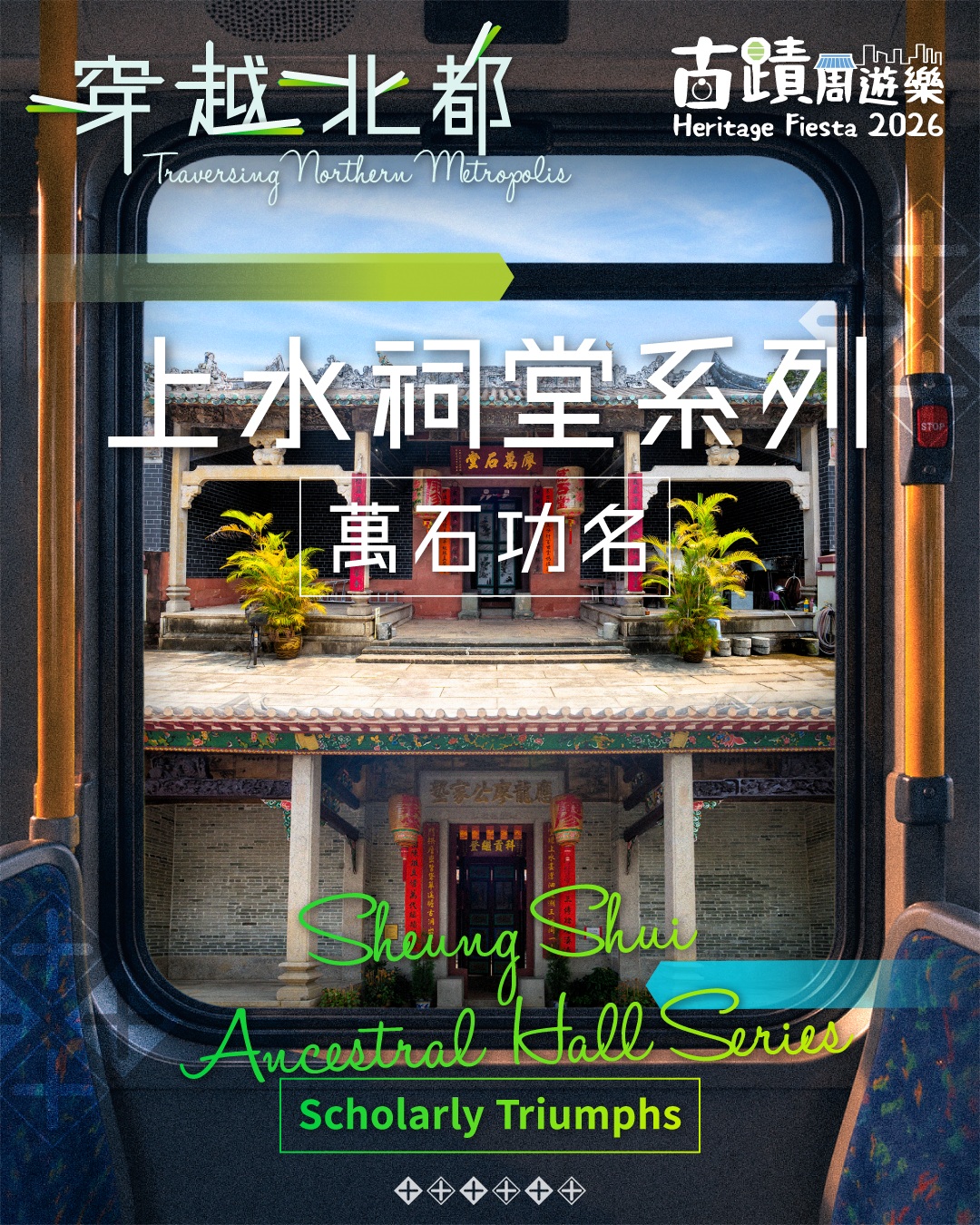
Route 3|Sheung Shui Ancestral Halls Series: Scholarly Triumphs

Route 3|Sheung Shui Ancestral Halls Series: Scholarly Triumphs
Play Video

📍 Stop 1: Liu Man Shek Tong Ancestral Hall (Declared Monument)
🚌Take Bus 73K from Sheung Shui MTR Station to Fung Kai No.1 Secondary School Stop
Do you know how the name “Liu Man Shek Tong” came about? It turns out that five outstanding members of the clan passed the Imperial Civil Service Examinations, with each earning an annual salary of 2,000 shi, totaling 10,000 shi, hence the name Liu Man Shek Tong (Liu hall of ten thousand shi). From 1932 to the early 1970s, this ancestral hall of the Liu clan of Sheung Shui Heung housed Fung Kai Primary School to educate the young clansmen📚

📍 Stop 2: Liu Ying Lung Study Hall (Grade 1 Historic Building)
👣A 5-minute walk from Liu Man Shek Tong Ancestral Hall along the village paths in Sheung Shui Wai
Also known as Hin Shing Tong, it once served as a 𝐵𝑜𝑘 𝐵𝑜𝑘 𝐶ℎ𝑎𝑖 study hall and housed Fung Kai Kindergarten. As one of the three main ancestral halls built by the Liu clan after settled Sheung Shui Wai, it is where clansmen hold spring ancestral worship, birthday celebrations, and weddings. From the murals on the façade and the plaster mouldings with scroll grass patterns on the ridge to the delicate wood carvings inside , every detail is exquisite. Its restoration project even won an Honourable Mention in the 2006 UNESCO Asia-Pacific Heritage Awards for Cultural Heritage Conservation🏆